
Peptides
What Are Research Peptides? A Complete Beginner-Friendly Guide
Apr
Research peptides are an important part of modern scientific studies, especially in fields like biochemistry, pharmacology, and molecular biology. If you’ve come across this term and wondered what it really means, you’re not alone. Many people are curious about how these compounds are used and why they are so valuable in research environments.
In this guide, we’ll break down what research peptides are, how they work, their common applications, and what to look for when sourcing them, while keeping everything clear, accurate, and easy to understand.
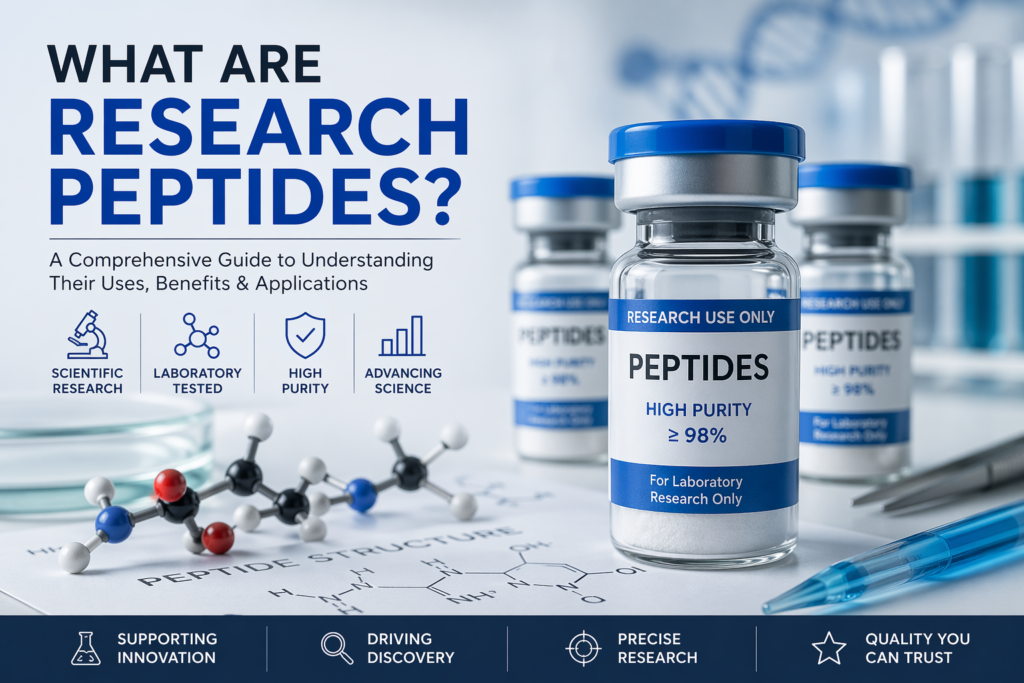
What Are Research Peptides?
Research peptides are short chains of amino acids that are specifically developed for laboratory and scientific research purposes. Amino acids are often referred to as the building blocks of proteins, and peptides are essentially smaller segments of these proteins.
Unlike full proteins, peptides are easier to study because of their simpler structure. This makes them ideal for controlled experiments where researchers want to observe specific biological interactions at a molecular level.
These compounds are not intended for human or animal consumption. Instead, they are used strictly in laboratory settings to explore biological processes and scientific hypotheses.
How Do Research Peptides Work?
To understand how research peptides work, it helps to look at their role in the body. Naturally occurring peptides act as signaling molecules. They help cells communicate with each other and regulate various biological functions.
In research settings, synthetic peptides are used to mimic or study these natural processes. Scientists can observe how peptides interact with:
- Cell receptors
- Enzymes
- Hormonal pathways
- Immune responses
Because peptides can be designed with precision, they allow researchers to isolate specific variables and better understand complex systems.
Why Are Research Peptides Important?
Research peptides play a key role in advancing scientific knowledge. Their importance lies in their versatility and precision.
Here’s why they matter:
1. Targeted Research
Peptides can be designed to interact with very specific biological pathways, making experiments more controlled and accurate.
2. Easier Analysis
Compared to larger proteins, peptides are simpler to analyze and manipulate in laboratory conditions.
3. Wide Range of Applications
They are used across multiple scientific disciplines, from medical research to biochemical studies.
4. Innovation in Science
Many breakthroughs in modern science involve peptide research, helping scientists explore new ideas and test innovative concepts.
Common Types of Research Peptides
Research peptides are often grouped based on their intended area of study. While there are many different types, here are some of the most commonly researched categories:
Growth Hormone-Related Peptides
These are studied for their interaction with growth hormone pathways and regulatory mechanisms.
Metabolic Peptides
Used in research focused on metabolism, energy regulation, and cellular activity.
Cognitive Peptides
These peptides are explored in studies involving brain function, memory, and neurological processes.
Healing and Regeneration Peptides
Often used in experiments related to tissue repair and cellular regeneration.
Each type serves a unique purpose and is selected based on the specific goals of the research project.
How Research Peptides Are Made
Research peptides are typically synthesized in controlled laboratory environments using advanced techniques. The most common method is called solid-phase peptide synthesis (SPPS).
This process allows scientists to:
- Build peptide chains step by step
- Ensure high precision in amino acid sequences
- Maintain consistency across batches
After synthesis, peptides are purified and tested to confirm their composition and quality.
Quality and Testing Standards
Quality is one of the most critical factors when working with research peptides. Even minor impurities can affect experimental outcomes.
Reputable suppliers follow strict quality control measures, including:
- High-performance liquid chromatography (HPLC) testing
- Mass spectrometry analysis
- Purity verification
- Batch consistency checks
Many suppliers also provide Certificates of Analysis (COA), which document the testing results and confirm the peptide’s specifications.
Proper Storage and Handling
To maintain their stability, research peptides must be stored and handled correctly. Improper conditions can lead to degradation and reduced effectiveness.
Best practices include:
- Storing peptides in a cool, dry environment
- Protecting them from direct light and heat
- Using appropriate laboratory containers
- Minimizing exposure to contaminants
Following these guidelines helps ensure reliable results during research.
Where Are Research Peptides Used?
Research peptides are widely used in scientific and academic settings. Some common environments include:
- University laboratories
- Pharmaceutical research facilities
- Biotechnology companies
- Independent research institutions
In these settings, peptides are used to study biological mechanisms, test hypotheses, and contribute to scientific advancements.
Are Research Peptides Legal?
Research peptides are generally legal to purchase and possess for laboratory research purposes. However, regulations may vary depending on the country or region.
It is important to note:
- They are not approved for human or animal consumption
- They must be used in compliance with local laws
- Buyers are responsible for ensuring proper use
Always verify regulations in your area before purchasing or using research peptides.
How to Choose a Reliable Peptide Supplier
Not all peptide suppliers are created equal. Choosing a reliable source is essential for ensuring product quality and research accuracy.
Here’s what to look for:
- Transparent product information
- Availability of lab testing data
- Positive reputation in the research community
- Secure ordering and delivery processes
Avoid suppliers that lack documentation or provide unclear product details, as this can lead to inconsistent results.
Key Benefits of Research Peptides
To summarize, research peptides offer several advantages:
- Precision in scientific studies
- Flexibility across multiple research fields
- Easier handling compared to full proteins
- Reliable results when sourced from quality suppliers
These benefits make them a valuable tool in modern research.
Legal Disclaimer
Research peptides are intended strictly for laboratory and scientific research purposes only. They are not intended for human or animal consumption. Any misuse of these products is strictly prohibited.
Researchers must follow all applicable laws and safety guidelines when handling these compounds.
Final Thoughts
Understanding what research peptides are is the first step toward appreciating their role in scientific discovery. These small but powerful compounds allow researchers to explore complex biological systems with precision and control.
As research continues to evolve, peptides will remain an essential part of scientific innovation. Whether you’re a beginner learning the basics or someone exploring advanced studies, having a clear understanding of research peptides can help you make informed decisions and achieve better results in your work.
Frequently Asked Questions
What are research peptides used for?
They are used in laboratory settings to study biological processes and molecular interactions.
Are research peptides safe?
They are safe for research use when handled by trained professionals in controlled environments.
Can research peptides be purchased online?
Yes, they are available through reputable research suppliers.
Do research peptides require special storage?
Yes, they should be stored in controlled conditions to maintain stability and effectiveness.
